
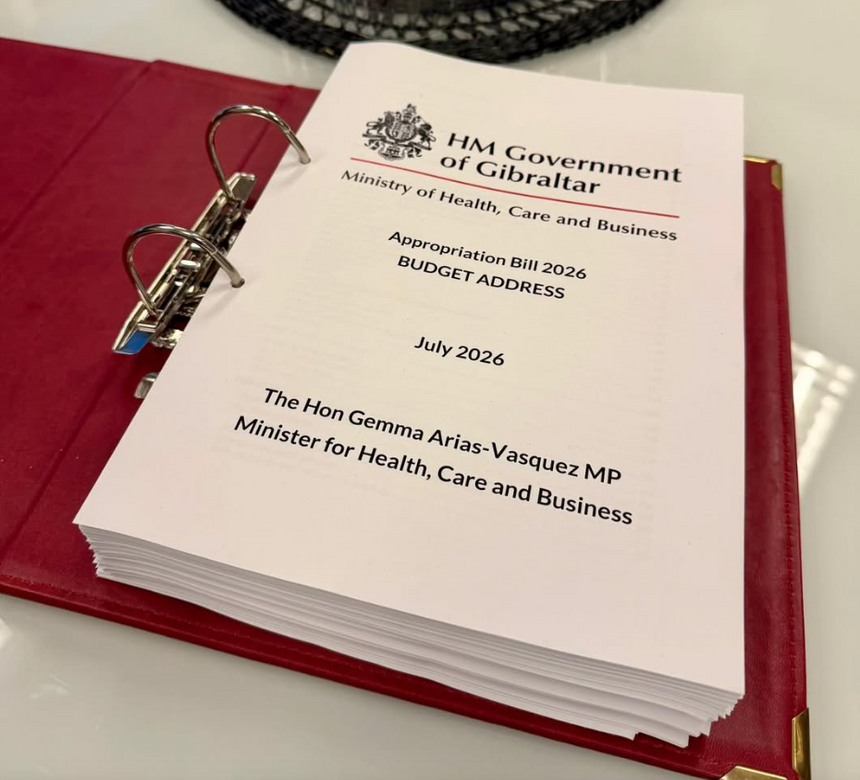

In the 2026 budget session, the Minister for Business set out how His Majesty's Government of Gibraltar intends to support businesses through the transition from the former Import Duty regime to the new Transaction Tax framework, ahead of Treaty implementation. The measures are aimed at the sectors most affected by the change, and the detail will follow in regulations over the coming weeks. This note summarises what was announced and what businesses can do to prepare.
Two support schemes, one choice
The Government will introduce two support schemes, and a business will be able to apply for only one of them.
The Transaction Tax Transition Support Scheme extends the measure previously announced as the Transaction Tax Deduction. It is targeted at businesses that can demonstrate they are materially worse off under Transaction Tax than they would have been under the former Import Duty regime during the first year. The scheme works by comparing what a business would have paid under the previous Import Duty system with what it has actually paid under Transaction Tax. The assessment is retrospective, carried out at the end of the first 90 days once the true impact can be measured, and it will be assessed independently by a committee. The Government will convene formal meetings every three months with the GFSB, the Chamber of Commerce, HM Customs and the Department of Business to review the measure's impact and whether it should be extended beyond the initial 90 days. Anti-avoidance provisions will accompany the scheme, which is intended for genuine need rather than windfall gain. Further guidance is expected within the next month.
The Business Adaptation and Modernisation Support scheme is the alternative measure. It is designed to help businesses invest in themselves rather than to address the tax change directly, with assistance towards modernisation, process improvement, consultancy, innovation, staff training, digital systems and similar practical steps. It is to be designed within the State Aid framework, on the basis of the General Block Exemption Regulations, and funded directly by the Government. It is targeted solely at the retail and hospitality sectors, where the impact of the transition is expected to be most keenly felt. The application process, eligibility criteria and required documentation will be published in due course.
Conditions common to both schemes
Several conditions apply to both schemes. A business may apply for one scheme only. Neither scheme applies to supermarkets or to tobacco, wine, spirits, fuel or vehicle retailers. Applicants must be up to date with all payments of PAYE, social insurance and corporate tax, and with all filing requirements. The amount recoverable is capped at an amount that is no more than 50 per cent of the corporate profits paid by the business in the previous tax year or years, and that does not infringe the State Aid Rules or the terms of the Treaty. The Government has confirmed that it has taken independent State Aid advice and been advised that the measures do not infringe the State Aid Rules.
Rates relief and rent
Alongside the two schemes, the Government will publish regulations within the next fortnight setting out relief from rates and a moratorium on rent increases, measures previously announced by the Chief Minister. The rates relief will be extended to the restaurant sector, in the same way as it applies to the retail trade.
Legacy Stock Declaration
The Minister confirmed that the Legacy Stock Declaration exercise, sent to all businesses licensed to trade in goods in order to assess non-EU stock and goods in transit ahead of Treaty implementation, has concluded, and that the data is being analysed to inform targeted support and to manage the transition.
What businesses should do now
For many businesses the practical question is a simple one: will I pay more under Transaction Tax than I did under Import Duty, and if so, by how much? That comparison is central, because it is the test at the heart of the Transaction Tax Transition Support Scheme. Businesses that expect to be affected should begin to understand their own position and take advice, so that they are prepared when the guidance, and the detail of the evidence the scheme will require, are published.
Hassans is working on a free online tool that helps businesses classify products against the Gibraltar Integrated Tariff and calculate the transaction tax, excise and customs duty on the goods they import. Hassans is available to advise on how the transition affects a particular business and on the support measures now announced.
A note of caution
The schemes will be governed by regulations that have not yet been published, and the detail may differ from the outline given in the budget address. This note is a summary for general information and is not legal or tax advice. Businesses should take advice on their own circumstances.
For more insights from our legal experts, please subscribe here.
/Passle/5e2ef0738313d50b64779f79/MediaLibrary/Images/2026-10-20-08-24-23-877-6ad725376b3e1917a7cbc83d.png)
Revolut secures Gibraltar DLT licence to support global crypto expansion.
Global fintech Revolut has been granted a Distributed Ledger Technology (DLT) Provider licence by the Gibraltar Financial Services...
/Passle/5e2ef0738313d50b64779f79/SearchServiceImages/2026-10-20-09-28-29-534-6ad7343d1209e9b330ac8eb4.jpg)
/Passle/5e2ef0738313d50b64779f79/MediaLibrary/Images/2026-10-08-13-44-52-268-6ac79e541204b135b13bff1e.png)
