

BP's first-quarter 2026 profits doubled. Shell's rose by nearly a quarter. TotalEnergies posted a 51 per cent jump. The headlines wrote themselves - and so did the political response.
Within hours, the calls for tougher windfall taxes were renewed across Westminster, Brussels, and beyond. The UK's Energy Profits Levy, already at 38 per cent and extended to 2030, is under pressure to increase further. Five major EU member states have formally urged the European Commission to introduce a new bloc-wide excess profits levy. Italy has already acted unilaterally. The Electricity Generator Levy in the UK has been raised and extended. The pattern is unmistakable: when profits rise during a cost of living crisis, the political reflex is to reach for the tax lever.
What makes this moment different is the trajectory. Windfall taxes were sold as temporary - crisis measures tied to the aftermath of the Ukraine conflict. Four years on, they are not only still in place but expanding in scope, duration, and ambition. The Czech Republic reversed its planned abolition. Slovakia extended its measures to 2027. The rhetoric has shifted from energy to banking and, increasingly, to any sector perceived to be earning "too much."
For business owners, investors, and advisers, the implications are serious. Fiscal unpredictability erodes the ability to plan, to invest, and to price risk. BP's decision to exit the UK North Sea after 60 years is a case study in what happens when the tax environment becomes hostile to capital. When the overall effective rate reaches 78 per cent and the policy horizon is subject to the next election cycle, rational capital moves elsewhere.
This is not a political commentary. It is a practical observation. Businesses need jurisdictions where the rules are clear, stable, and internationally respected - where tax policy is a framework for growth, not a tool of crisis management.
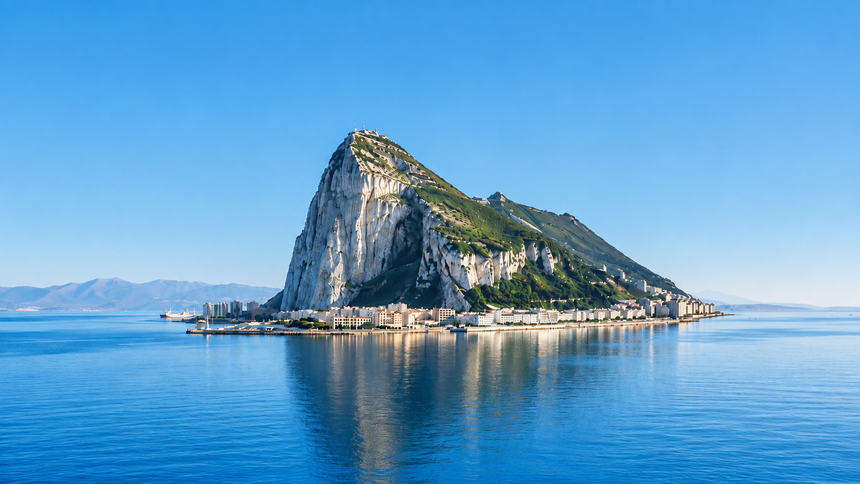
This is why Gibraltar matters.
Gibraltar's corporate tax rate is 15 per cent - precisely aligned with the OECD's Pillar Two global minimum. There is no capital gains tax, no inheritance tax, no wealth tax, and no VAT. The system is territorial, transparent, and fully OECD-compliant. In June 2026, Spain formally removed Gibraltar from its tax haven blacklist after 35 years, recognising what the international community has long acknowledged: that Gibraltar operates one of the most transparent and well-regulated financial centres in the world.
The recently concluded UK-EU Agreement in respect of Gibraltar - provisionally applied since 15 July 2026 - represents a further, and in many respects defining, layer of stability. The treaty establishes a comprehensive framework for the movement of persons and goods, customs cooperation, indirect taxation, and governance. It includes level playing field provisions on state aid, environmental standards, and tax transparency. Critically, it preserves British sovereignty, maintains Gibraltar's domestic tax and regulatory system, and provides a dispute resolution mechanism overseen by independent experts.
What this means in practice is that Gibraltar is not merely a low-tax jurisdiction. It is a jurisdiction whose legal, regulatory, and political foundations have been reinforced by an international treaty between two of the world's largest economic blocs. At a time when businesses in the UK face a 78 per cent effective tax rate on North Sea profits and companies across Europe face the prospect of yet another round of excess profits levies, the value of that certainty cannot be overstated.
For clients and investors already operating through Gibraltar, the message is one of reassurance. Your jurisdiction is not subject to the reactive fiscal interventions that are reshaping the tax landscape elsewhere. For those considering Gibraltar as a base, the case has never been stronger - not because the rate is low, but because the environment is stable, the regulation is credible, and the international framework supporting it is now treaty-backed.
In a world where governments are increasingly willing to treat corporate profits as a political problem, the jurisdictions that will thrive are those that treat fiscal policy as a framework for confidence. Gibraltar is one of them.
For more insights from our legal experts, please subscribe here.
On Monday, US President Donald Trump said American oil firms ExxonMobil and Chevron were "making too much money". He told reporters: "I don't like it, and I should be the last one to say because I'm a big free enterprise guy. "They ought to give some of that back to the public, and they better cut the retail price, the consumer price."
www.bbc.com/...
/Passle/5e2ef0738313d50b64779f79/MediaLibrary/Images/2026-10-20-08-24-23-877-6ad725376b3e1917a7cbc83d.png)
Revolut secures Gibraltar DLT licence to support global crypto expansion.
Global fintech Revolut has been granted a Distributed Ledger Technology (DLT) Provider licence by the Gibraltar Financial Services...
/Passle/5e2ef0738313d50b64779f79/MediaLibrary/Images/2026-10-22-13-43-48-368-6ada1314a7658aff68f852d5.png)
/Passle/5e2ef0738313d50b64779f79/SearchServiceImages/2026-10-20-09-28-29-534-6ad7343d1209e9b330ac8eb4.jpg)
